
Collecting coins does not require large expenses. Many people build strong collections with small monthly budgets and careful planning. A modern coin scanner app helps beginners sort early finds and understand what they already own.
The main idea is simple: start small, stay organized, and learn how to recognize value without paying for every lesson. This guide explains clear steps that help any collector grow a meaningful set while spending very little.
Set a Realistic Budget and Define Your Collecting Focus
A limited budget works best when you know your direction. Coins come in thousands of types, so narrowing down the field saves both money and time. Some collectors choose one theme. Others focus on countries, years, metals, or small design shifts. A focused approach reduces impulse purchases and forms a clean structure from the beginning.
A reasonable budget helps avoid pressure. A few dollars per week already gives opportunities for interesting finds. The key is stability, not size. One clear collecting aim also protects you from buying coins without purpose. All choices become easier when you know what you are assembling.
Choose one of these simple paths if you want low expenses:
- A series with many circulating examples,
- A group of coins from your country,
- A thematic idea (animals, buildings, national symbols),
- Notable years or redesign periods.
A clear direction provides a filter. You immediately see which coins matter and which are unnecessary for your plan.
Start With What You Already Have
The cheapest way to begin is to examine coins already around you. Many people keep jars of spare change. Others have old wallets, inherited boxes, or travel leftovers. These sources often contain unexpected pieces. You can find Lincoln Bicentennial cents, State Quarters, or Jefferson nickels with redesigned elements. Some world coins, such as Canadian cents or Euro cents, also appear in mixed change.
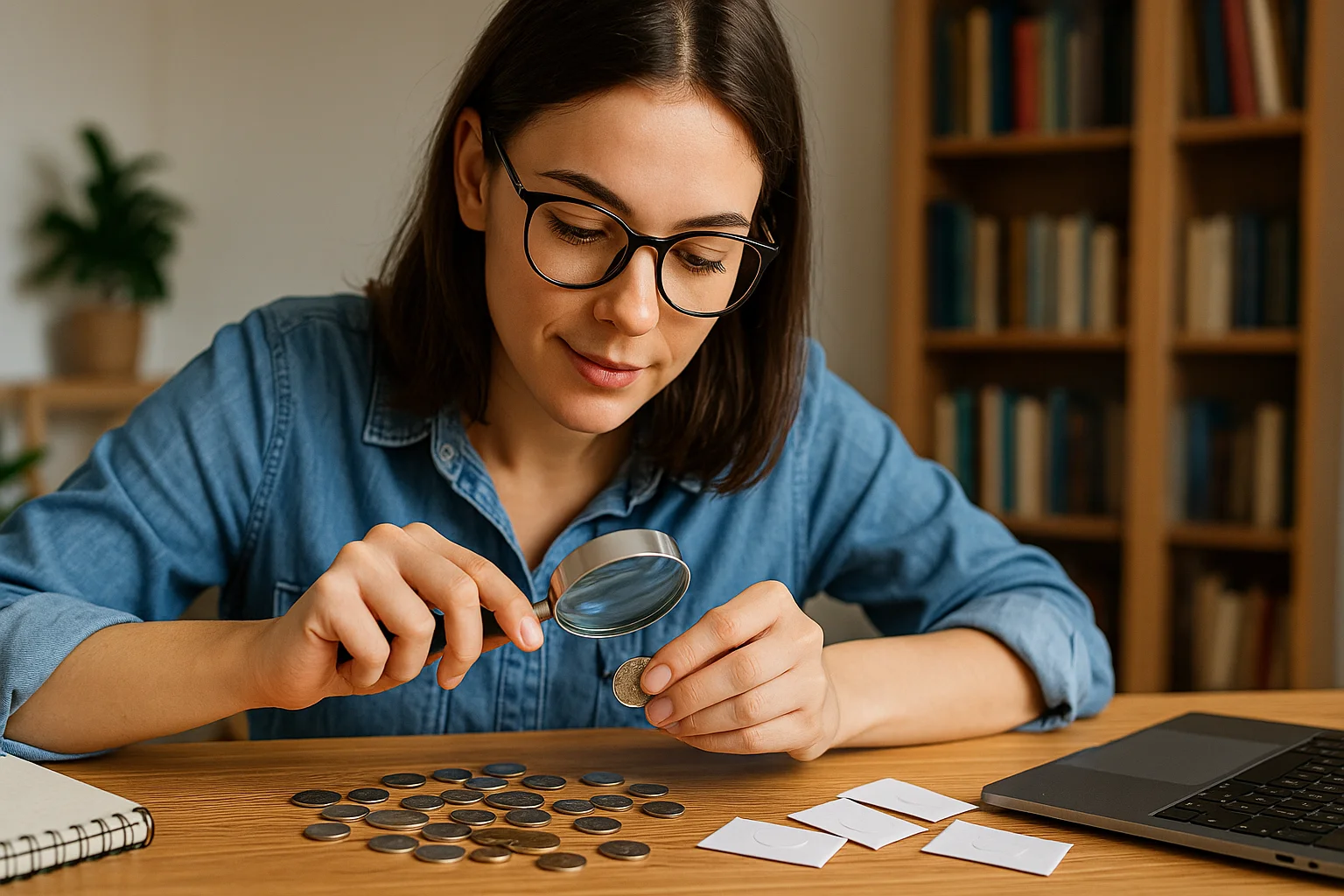
Spread the coins on a table and create small groups. Sort by year, country, and type. Separate anything with unusual marks, different metal colors, or odd details. This first pass teaches you how many differences exist even in modern circulation. It costs nothing but gives a strong base for further steps.
This stage also helps identify what interests you most. You may discover that you enjoy design differences more than metal differences. You may prefer modern coins or older styles. You learn this only by sorting real pieces.
Learn Basic Identification Without Spending Money
Before buying anything, learn how to recognize essential features. A collector must know how to read a coin’s story from its appearance. Most skills come from careful observation, not from expensive tools.
Key points to check:
- Year: Helps place the coin in a historical context.
- Mintmark: Shows where the coin was made.
- Metal: Often visible on edges or by weight.
- Condition: Tells how many details remain.
- Design components: Portrait, reverse, lettering, edge pattern.
Use natural light. Turn the coin slightly. Look at the relief. Compare similar pieces to find differences in digits, spacing, or texture. These habits create a strong foundation for future collecting. They also prevent unnecessary purchases because you understand what makes a coin desirable.
This stage requires no money. You only need patience and interest in details.
Explore an Affordable but Interesting Coin Series
Beginning collectors benefit from series that combine low cost with solid educational value. Below are groups that provide variety, history, and structure without heavy spending.
2009 Lincoln Bicentennial Cents
These cents feature four reverses that show stages of Lincoln’s life. They are easy to find and teach beginners how design changes reflect national events.
Statehood Quarters (1999–2008)
Each state has its own design. The series introduces coin programs, die preparation differences, and circulation patterns. Most pieces cost a few cents.
National Park Quarters (2010–2021)
The designs present landscapes, historic places, and cultural themes. They appear in circulation and allow collectors to create full date-and-design sets with minimal cost.
Jefferson Nickels (2004–2006 redesign)
This period includes new portraits and new reverse elements. These coins teach how small design updates influence collecting.
Canadian Cents and Low-Denomination World Coins
Canadian coins have clear designs and many date variations. European cents introduce multiple countries in one small package. These coins usually cost very little.
2019–2020 W-Mintmark Quarters
Even circulated examples are valuable learning pieces. They show how mintmarks and distribution changes affect rarity.
These series help new collectors practice structure, identification, and comparison. They also remain affordable enough for anyone who wants to build a diverse collection step by step.
Build a Buying Strategy That Fits a Small Budget
A budget collector must think strategically. Not every coin deserves a purchase. Many interesting coins come from cheap sources or bulk listings. The main rule is to avoid paying premium prices for common items.
Useful methods:
- Buy small mixed lots instead of single coins. The cost per coin becomes lower.
- Choose coins with strong details. Worn pieces rarely add value to a collection.
- Avoid impulse decisions.
- Keep a list of the coins you want.
- Compare prices from several sellers before buying.
- Learn typical prices for common items, so you recognize overpriced listings.
A structured buying plan ensures that every purchase adds value to your collection rather than filling space without purpose.
Use Digital Tools to Sort, Verify, and Learn
Digital identification helps beginners avoid confusion when handling many coins. For example, your best coin identifier app for iPhone should read the main elements of a coin and show the basic information needed for early sorting. These apps highlight mint years, countries, general types, and simple attributes.
This step saves time. It also reduces early mistakes when you cannot yet recognize designs by memory. Many collectors use apps to record their finds and create simple lists. This makes the first stages of collecting smoother and more organized.
Apps support your learning, but you still need manual checks. Real metal composition, relief quality, and strike differences require a real look. Digital tools narrow the field and show where to focus attention.

Organize and Store Your Collection
A good organization keeps costs low. When your coins are sorted and clearly labeled, you avoid buying duplicates and track your progress more easily. The goal is to build a system that works even with limited space and small expenses.
Use simple materials:
- Paper holders,
- Coin envelopes,
- Plastic pages for binders,
- Small boxes with dividers.
For digital structure, a coin scanner app for Android and iOS can store photos, notes, and categories. This approach helps maintain order without buying professional albums. You can tag coins by series, country, or year and keep everything available on your phone.
Organization is one of the strongest tools for collectors on a budget because it prevents unnecessary spending.
Practice Value Evaluation and Avoid Typical Errors
A collector must know how to judge value, even when handling inexpensive coins. You do not need advanced certification for this level. You only need awareness of the main factors.
These points influence value: mintage, condition, design differences, metal type, and collectors’ demand.
And here are common mistakes:
- Buying coins with heavy wear,
- Chasing “old-looking” coins that are actually common,
- Assuming that age alone creates value,
- Ignoring small details such as mintmarks or design shifts.
Values are easier to understand when you compare coins directly. The ability to evaluate condition, relief, and rarity protects your budget and improves your future decisions.
Look for World Coins to Expand Your Collection Cheaply
World coins give more variety for less money. Many countries produced attractive designs with large mintages, so they appear in global bulk lots. These coins introduce new portraits, symbols, and art styles. They also allow collectors to study different systems without significant cost.
Where to find them:
- Mixed world bags,
- Flea markets,
- Travel change,
- Local swaps,
- Online lots with many pieces.
Focus on coins with strong designs or interesting historical context. World coins broaden any collection and increase your knowledge without adding financial pressure.
Final Thoughts
A limited budget does not limit collecting. It simply changes the strategy. Start with coins you already have, learn to identify the main features, and use structure to guide your choices. Digital tools help with simple checks, but careful observation remains essential. A clear system keeps your spending under control and lets your collection grow.
Tools like Coin ID Scanner support beginners by helping them organize and verify finds, but the core of collecting stays in your hands. Start your way, follow these steps, and turn even a small budget into a strong and well-built collection.